Star Wars: A New Hope - Not really sci-fi?
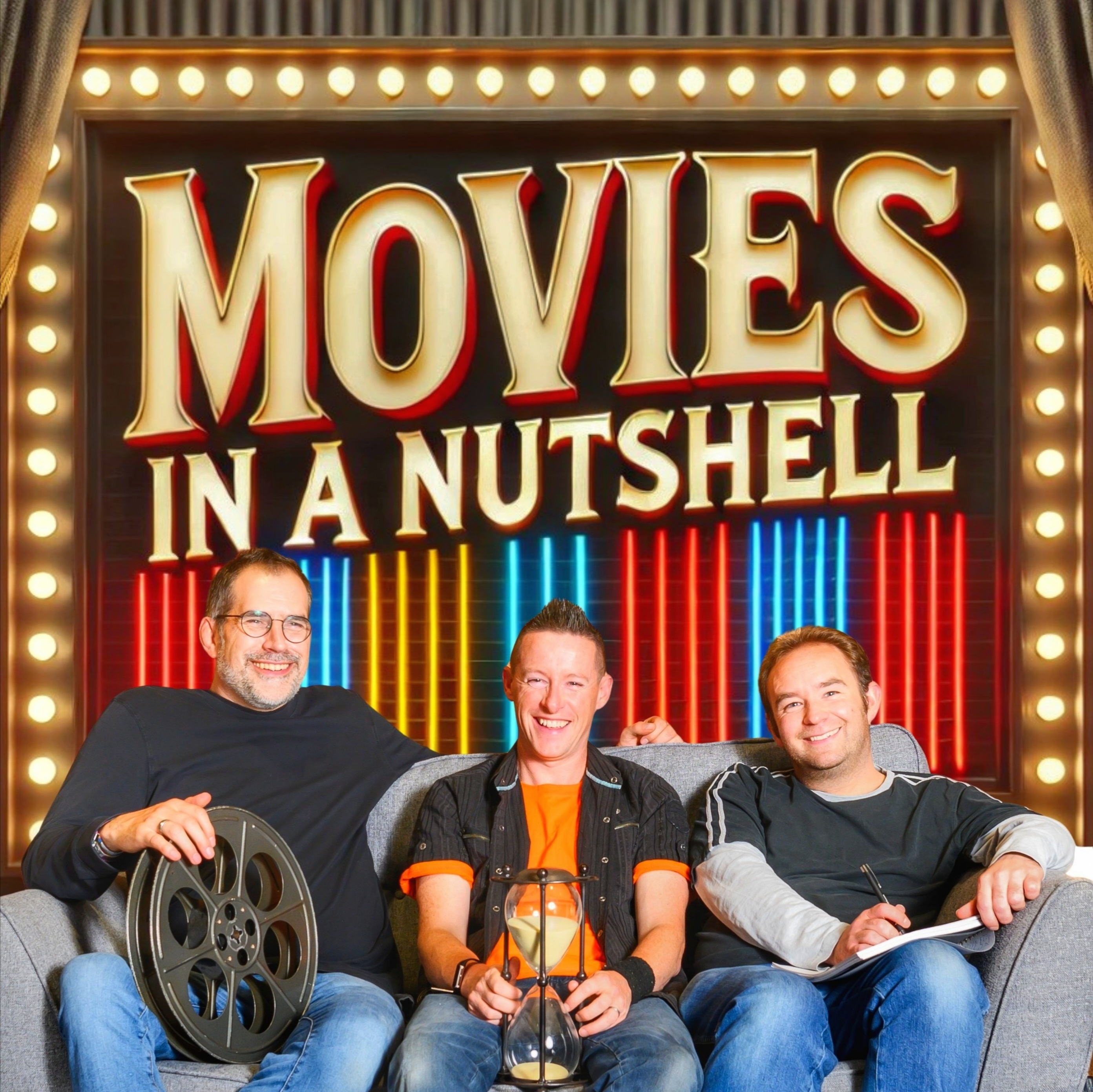
Join Marc, Darren and Paul as they give you everything you need and more to help you decide to watch or re-watch.
Star Wars: A New Hope (1977)
PART 1 – The Nutshell – If you haven’t seen it
A spoiler-free breakdown designed to help you decide if this iconic space adventure is your kind of film and worth your time.
We explore the film’s central idea around a classic hero’s journey, where an ordinary individual is drawn into a much bigger conflict between good and evil.
We’ll give other movie comparisons plus tone, style and feel so you can quickly judge if it's your kind of movie.
By the end of Part 1, you will have made a decision!
PART 2 – The Unboxing – If you’ve seen it
What Did You Miss?
The things you missed, the details you didn't notice and the layers beneath the surface. This will make you want to watch it again.
The lads explore the film’s deeper themes around destiny, balance and rebellion, and how these ideas are woven into a story that feels both simple and timeless.
They also break down the storytelling choices, world-building and character dynamics, and how the film effortlessly shifts between humour, tension and adventure.
Paul’s Facts of the Day
Behind-the-scenes insights including:
• Creative decisions that helped shape the film’s identity and legacy
• Groundbreaking techniques that changed how films were made
• Unexpected challenges during production and how they were overcome
• Details about how certain iconic moments were brought to life
• Subtle elements and connections you might not have picked up on
Hate It or Rate It?
Marc, Darren & Paul submit their scores and Star Wars: A New Hope (1977) takes its place in the Legend League.
PART 3 – Listener Lounge – All about you!
The Lobby
Your emails, questions, comments and stories.
Question of the Week
A recap from last week’s question plus the lads ask this week’s burning question!
Next week’s movie
The big reveal of next week’s movie!
Listen Now
League Tables:
The Legend League
Every movie we’ve featured and rated on the podcast
The Listener League
See how how we rated the movies chosen by our listeners.
Join the conversation
Voice message: https://linkly.link/2FuSQ
Email: hello@moviesinanutshell.com
Socials
Website: https://www.moviesinanutshell.com
Instagram: https://www.instagram.com/moviesinanut
Facebook: https://www.facebook.com/moviesinanut
Your Hosts:
Marc Farquhar
Instagram: https://www.instagram.com/marcfarquhar
https://www.facebook.com/themarcfarquhar
Darren Horne
LinkedIn: https://www.linkedin.com/in/thedarrenhorne
Paul Day
Instagram: https://www.instagram.com/pauldaylive23
Music
Main Theme
BreakzStudios
https://incompetech.com/music/royalty-free/?keywords=breakzstudios
Music Bed
Protofunk – Kevin MacLeod
https://incompetech.com/music/royalty-free/?keywords=protofunk
All music licensed under Creative Commons.
Transcript
I was literally being made while this movie was being made.
Paul:That's, that's the incredible. I can't beat that as a fact of the day.
Marc:That's force is strong with this one.
Darren:Yeah.
Paul:Nice.
Darren:And then you showed a Phantom Menace and she broke up with you.
Marc:Biggest mistake of your life.
Paul:That was the end.
Marc:Hello and welcome to Movies in a Nutshell with me, Marc Farquhar, myself, Darren.
Paul:Horn, and I, Paul Day.
Marc:Here's why you should tune in every week.
Darren:We help you make better movie choices on films you haven't seen with quick spoiler free breakdowns to help you decide if they're your kind of movie.
Paul:And we help you get more from the movies you have seen with things you missed and details you probably didn't know us.
Marc:Plus, there's movie facts, trivia and behind the scenes stories.
Paul:There's also your chance to choose the movie.
Marc: we are. Star Wars a new hope.:And before we start, as always, the first episode in a month, which is now April, the listener choice will be open. It is open right now.
Paul:You love a listener choice.
Marc:If you all listen to this on day of release, which I know a lot of people do, if you look on our socials, the voting will be open. You can request your movies if you're not on social media or, you know, on Instagram. You can email us hello at Movies in a nutshell dot com.
Choose a movie that you'd like us to give our nutshell treatment to or a movie you'd like to learn some different things about, some facts of the day, some behind the scenes, all that type of stuff. Send them in and we'll add it to the wheel. This is part one, which we call the nutshell in which we break the movie down. Spoiler free.
To help you decide if Star Wars A New Hope is your kind of movie and worth your time. I mean, I mean, there always are some people who haven't seen movies that the majority of us have seen, but.
Darren:That's for them and they're always smug about it. Well, I've never watched a Star wars movie. Well, I've never watched Game of Thrones off.
Paul:I see this in comments as well.
Darren:Yeah.
Paul:And you think, what do you want, a medal? Yeah, they don't like popular.
Marc:Probably haven't seen something that's highly regarded by the majority of the population. Why would you do that? So one of the most iconic movies of all time. How do we break this down. What's the. What's the basic premise?
Paul:Well, we're drawing from classic mythology, westerns, samurai films, and it's a space fantasy. We always say it's not a sci fi. This.
Darren:It's space opera.
Paul:Space opera, yeah.
Darren:But western, you know, you could argue, and certainly samurai.
Marc:And I would say this is. I think part of the reason why it's so widely regarded is because it's not one of those movies where it's about genre.
It's about the story, the telling of a story done really well. The science fiction or the technical aspect of it don't really doesn't matter if you're not into that.
Darren:Well, the science fiction kind of isn't relevant to the story. So it's more spiritual and about our relationship with nature and the universe and.
Marc:But I'm thinking as someone who probably thinks it's about that this, this is them telling. It's more about the story than the. The science or the, you know, the space and all that.
Paul:But having said that, it is set in space. There are robots, there are laser swords or lightsabers. Are you, as you will come to know of them. And there are things like that.
So if you're not into that kind of thing, you're probably going to struggle.
Marc:I'm not sure. Maybe I think the story is strong enough that it will. People get. People who are not into sci fi could still get something out of this.
Paul:And it's. It's true. I introduced an ex girlfriend to it who hadn't seen any of them. And I started with this one.
Rather than doing prequels, we'll get into talking about that, I'm sure, at some point. But I said, you know what? We'll do the original one.
And she did struggle at first because it felt a bit 70s and a bit like, oh, what the hell's going on? But then it grew on her as she was watching it and she got hooked into the story. And then by the end of it, she'd seen all of. All of them.
You know, we'd gone through all of them and she got hooked into the story. So you are right.
Darren:And then you showed her Phantom Menace and she broke up with you.
Marc:Biggest mistake of your life.
Paul:That was the end. I don't mind the prequels, but we'll come on to that later.
Marc:So what starts out as a personal journey ends up becoming a galactic battle.
Paul:Yeah, it's a hero's journey.
Marc:It's got a lot of the classic storytelling elements.
Darren:Yeah, it's with the creation of It. I think Chris Vogler was very involved and he was a guy who took a lot of Joseph Campbell's work, which is Hero's Journey, and applied it to Disney.
Wrote this memo, I think, in the 70s, and, and I think. Yeah, so this is, this is classic hero's journey.
The ordinary guy in the ordinary world who gets a call to adventure, doesn't want to answer the call, but then does, Gets a mentor, gets allies, crosses the threshold, goes into the, you know, belly of the whale, kills the cave, kills the dragon. It's all metaphorical, of course, but it's, it follows it perfectly.
Marc:A classic hero's journey.
Paul:It's amazing you were describing that. No spoilers. But that is the story, theme wise. That's exactly.
Darren:It's a. It's a fairy tale set in space.
Marc:I mean, there's loads of other movies where it could be matched, the journey could be matched.
Darren:Harry Potter in Lord of the Rings. It's mythical.
Marc:I think part of what makes it so appealing on a mass scale is it's, it's quite the clarity of it. Like you say, it's a classic, simple hero's journey dressed up with a lot of like, adventure, science adventure, not science fiction.
But it's the story that drives the, the whole thing. It's not trying to confuse you, it's just kind of taking you along for the ride.
Darren:Particularly this being the first one. It's, it's. We said with James Cameron and the Terminator that uses very archetypal characters. And this is very much that.
Marc:It's, It's a story. It's a story most people have seen before. It's relatable.
Darren:Yeah.
Paul:And don't forget, obviously, Star wars is last. You know, this is 77 is a long time ago now, but it's kind of still lasted in the modern generations.
Whether that's either because the originals have stuck with it or because they've had new iterations going through generations and things.
But, but when George Lucas was making it, and Darren will know this as well, he originally wanted the rights to Flash Gordon and they didn't give him it. So he's like, you know what? I'm gonna make my own.
So his reference point for it is kind of the Saturday matinee movie book Rogers, Flash Gordons, this kind of stuff. And that's where it came out of there. But for now, all our reference points now go back to Star wars because it became so much bigger. So.
So our reference point's now Star wars, but the reference point for Star wars was probably Flash Gordon. So it's kind of moved on in that sense.
Marc:Yeah. It's got the classic hero's journey, a battle between good and evil, and a call to action that can't be ignored. Those are the three pillars of this.
Yeah.
Paul:And there's spaceships and droids and blasters and wizards and princesses, farm boys, heroes. Am I missing anything?
Marc:I mean, sometimes walking carpets.
Paul:Walking carpets, lots of alien creatures, things like that.
Marc:Sometimes a simple story can be boring, but if it's done right, it can be amazing.
Paul:And this, of course, let's face it, one of the main reasons why this became probably as massive as it became was, A, the characters, but B, the hyperspace leap forward in special effects that came with this film.
Marc:It's definitely ahead of its time.
Paul: a lot of people who saw it in: Marc:They'd not seen anything highly impactful.
Paul:We talked about it briefly in Spaceballs where they parody it, but this is obviously where they saw it and were like, wow. I mean, I think even Harrison Ford watched the thing because he's to be.
Marc:In Spaceballs or any, like, Hot Shots. When they do those kind of movies, that's a sign of cultural reference, cultural importance.
It's like when someone does a parody song, you've made it, it's a compliment.
Paul:And this took on its own world. So I think you're right, Darren. A lot of the people who probably haven't seen Star wars are the ones who have this.
I'm not proud that they haven't seen it.
Marc:Oh. Also, I think it's people who think it's just like it's more pure science fiction. Star wars, kind of. Quite possibly like sci fi. Yeah.
Paul:Because Trek is more on the sci fi side of it all. Whereas this is drawing from fantasy. And this could be just as much King Arthur and Merlin and wizards and dragons and things as it is in space.
And the clever thing was, you know, it's futuristic in a sense, but the opening title says, in a galaxy far, far away. A long time ago. A long time ago in a galaxy far, far away.
So immediately the placing it somewhere completely different in the past, which I always thought was quite a clever thing.
Marc:Yeah. Because typically what it says in the future.
Paul:Right.
Marc:Long, far, far away.
Paul:So I always thought that was quite a clever way to make it more mythological, to be like, oh, this could have happened many years ago.
Marc:What kind of watch is this, Darren? There's Multiple.
Darren:It's kind of like Paul suggested, it's like a Saturday morning fun one. It's a family one. You can watch it with your kids. It's.
It's a comfort movie for a lot of people, particularly our age where you watch it when you've got flu and you know, you're struggling to breathe or whatever.
Marc:You're trying. You're trying to beat the flu. He's trying to beat the dark side.
Paul:The Force will be with you always.
Marc:For my meets, I had Harry Potter meets the Avengers.
Paul:We're both thinking that through.
Marc:Like, yeah, you're a wizard, Harry. You can do it. Don't you say use the Force, Luke? Kind of like, you know, the Apprentice kind of.
Paul:And I feel like Harry Potter is a good example because that became the next generation Star Wars.
Marc:But when Avengers. More like when he becomes self aware and he starts believing in the Force, then when he meets with everybody else. They work as a team. Anything else.
Paul:But just the ones I said before. I mean, there's a bit of Dune in there probably.
Darren:Yeah.
Paul:I've only seen the new ones.
Marc:Most things that have come after it though.
Paul:Yeah, yeah, yeah, yeah. Nothing before the newer versions of this is probably things like Firefly Serenity, because he draws heavily on Star wars with.
Darren:The roguish Guardians of the Galaxy as well.
Paul:Guardians, yeah. That's a good call. Battlestar Galactica, which again was kind of them trying to copy Star wars in a TV show. It was so massive.
Everyone wanted to like. They ended up doing James Bond in space with Moonraker not long after this as well. Everything wanted to be in space after Star wars, didn't they?
Can't think of any others though. It very much is its own thing.
Marc:It was a trendsetter ahead of its time.
Paul:I'm watching it. I tried to watch it.
This is fine for the nutshell because I'm not going to give any spoilers, but when I watched it this time, because I've seen it much like both of you guys, probably billions of times I tried to watch it from. If this was the first time I was watching it, what would it be?
Marc:Pick up. Yeah, yeah.
Paul:And. And it is a lot of mythology and things. So you are very much brought into this brand new world. And for us, like you say, it's a comfort blanket.
Darren. Now because we're used to this world.
Marc:It's hard to imagine someone watching now for the first time.
Paul:Yeah, exactly.
Marc:Perhaps younger people will all the time. Thank you very much, gentlemen. That takes us on to part two, which Is the unboxing spoiler territory ahead?
If you haven't seen the movie and we've helped you decide you do want to watch it, we recommend you go and do so now because there will be spoilers from this point forward. So in the unboxing, we have, what did you miss? Where we reveal things you may have missed even if you've seen the movie many times.
Paul has his formidable facts of the day. And then we round off with Hate it or Rate it, where we each give our brief opinion score out of 10, and we see where it lands on the Legend League.
This could be.
Paul:Could be a death or there's a lot to unpack.
Marc:What did we miss in Star Wars?
Paul: he Star wars that came out in: Marc:Probably stuff that wasn't possible right at the time.
Paul:Right. And then that continued to get tweaked right into DVD releases and further releases.
Marc:I noticed on this one on Disney plus that there was effects there that I don't remember. Completely different to.
Paul: nt version, which is from the: Marc:That's the one I was thinking of,.
Paul:Which was a delete.
Marc:He's outside on the ship and hand goes around him and.
Paul: s tail. Yeah, that's all like: But then the version in:Now it's called Star Wars Episodes for a New Hope. Yeah. That all became later when it became more of a franchise.
Marc:So watching this now is when I watch any movie with these new movie in a nutshell goggles.
Paul:I'm very proud of you.
Marc:The music. So the fanfare, the 20th Century Fox fanfare. And then. And then the movie starts with Star wars and I'm like, hold on a minute.
I'm sure that's in the same key. Is that. Is that intentional? And then I looked it up.
Sure enough, John Williams deliberately composed the iconic Star wars main theme in B flat major, specifically matching the key of the 20th Century Fox fanfare to create the seamless transition from the studio logo into the film.
Paul:That's such a musician thing to notice, Mark.
Marc:I was like, yeah, never noticed that before.
Paul:What do you. So that's just some.
recently watched the original:So the version you'll watch on Disney has a lot more spruced up stuff going on than the original.
Marc:It's probably better to watch that version, the more updated version. It's nice to go back once you've seen it, I suppose, but I don't know if it's.
Paul:I like to do both. I like both versions. I like to watch where he tried to do. Because there's things in the new version where I don't quite agree with them.
Like there's R2D2 hiding behind some rocks when Obi Wan and Luke are in the canyon. Yeah, yeah, them rocks aren't there originally. They put them in later, other than.
Marc:That, just to hide the.
Paul:I guess they must have decided R2 needed to be more hid behind rocks. But then when you're looking through the rocks at the scene, looks like there isn't as many rocks because.
Yeah, that's the only scene I have a real issue with. I can cope with him stepping on Jabba's tail and all that. But the rock one, I'm like, let's go back into the story, what I missed.
yone has been souped up since:It's the anniversary, obviously. So they're gonna. Potentially. I've heard the rumor that they're going to bring out the original print where it's not got all that stuff on.
But what did we miss, Darren?
Darren:I mean, story wise, Star wars has always been political. And I think. I mean, I don't think people are going to miss this because I think it's spoken about quite a lot.
But George Lucas always bases on the Vietcong, wasn't it? So it was a Viet Cong being the rebels fighting against a massive empire. But within that description, America are the bad guys.
But that's pretty common. And you Know, good movies, particularly sci fi or movies like this will tell lies in order to tell the truth.
And we've seen, seen Star wars get really political with the and or TV show which is phenomenal. It's, it's just a really great intelligent show. Probably the best thing in the Star wars universe.
But dunes also the same like I don't know Dune as well. But isn't that about they kill a religious leader's father.
So he then works with these people who live on this planet to basically wage a holy war against the Empire and trying to cut off the precious spice that the Empire want. But in reality, in our world, that's oil. You know, we're, we're usually on the side of the people that our governments are suppressing. Suppressing.
It's weird, but I mean that's, I don't think that's particularly hidden. But you know, you've definitely got to say if you can talk about Star Wars. But then you know, we're very familiar with this movie.
So when I was watching it this time I was trying to pay attention to stuff that I might have missed or I hadn't kind of spotted a lot of the time. So the main one I picked up on, considering it's like a second time movie, I think, I think George Lucas had done thx, didn't he?
Paul:He did txx, then he did American Graffiti. And it was the success of American Graffiti that made Alan Ladd say, go on, you can have.
Darren:Yeah, so it's part of the American new wave where they suddenly started throwing money at very young directors like Spielberg and Coppola. Yeah, absolutely. But generally a whole bunch of young white guys who are nerdy as hell. Exactly.
And so they're taking risks like Spirit did Jaws, obviously later on James Cameron would do Terminator. So they're trying new things.
And as you alluded to, George Lucas really went deep with special effects and created his own department, Industrial Light Magic.
Marc:Ilm.
Paul:Ilm yeah. And the sound guys are called Skywalker Sound, I think.
Darren:Yeah.
Paul:Was it Bill THX who did Bill Burt? Yeah, yeah.
Darren:He just traveled around America recording all kinds of sound effects to do this. They really just like changing the landscape.
But what I really liked watching it is just how well drawn out the characters were and how believable they are and how everyone's taking it seriously. I mean like Alec Guinness and Peter Cushing are there. They're not phoning it in.
They're just say, okay, we don't quite understand this, but we'll, we'll we'll do this. That's fine.
Paul:Yeah, we can do this.
Darren:Yeah, like little things that I picked up on. Like there's a bit where they're just as stormtroopers and they go into a lift and another guy tries to get in.
And one of the guys in Stormtrooper kind of waves him off. He's like, no, no, we got a fucking wookie behind us. You just keep going. I think that's really cool. World building.
And then when they're coming out of this smugglers kind of hideout, Han Solo is like, you know, being all cocky, but then he reaches over, just scratches, chew his head like so. He's like, okay, what would I do in this world? And there's tons of little things. Oh. Even down to how unclogging and Aunt Beru. They're just.
They're world weary, but sweet and uncoen. Just feels like he's got the world, the weight of the world on his shoulders. And they're going to buy the droids.
And he's like, I suppose you're a blah, blah, blah, blah. And C3PO is like, yeah. And he's like, all right, shut up.
Paul:I love it.
Darren:What I like about Star Wars. Yeah, it's a psych. I don't think it's life. You guys know how I feel about that. But it's set in space. It's got aliens and spaceships.
And any other type of movie would be like, this is the coolest thing ever. Look at our ship. Look at these droids. Aren't they amazing? And this is just like. It's all a bit.
Paul:You came on that piece of junk. Yeah, than I thought.
Darren:Exactly.
Marc:And makes it feel very real. Real world in space, on another planet.
Darren:He's like, yeah, you wait. Shut up. We need these droids. We'll take them. It's all fine. And yeah, it does. It just makes it a real believable.
Marc:World where another version of Earth. Really? Yeah, Just set in a different time.
Paul:And the creature effects and everything. When you go into the bar, you know, there's obviously a lot of work going into that. But like you say, they treat it all as if it's normal.
Yeah, that's why it works.
Marc:We don't serve as kind in here.
Darren:Yeah, exactly.
Marc:Racism there.
Paul:Yeah, yeah, yeah. Droidism.
Darren:Exactly.
Paul:Yeah.
Darren:He's really thought about it. And even there's a bit where he's trying to fix. Luke's trying to fix R2D2. And he's like, you got some scoring in here.
C3PO says, what with the rebellion and all and, like, he's acting as. Immediately he drops it and spins.
Paul:He's like, you know the rebellion against the Empire.
Darren:Yeah. And he said, well, there isn't much to say. He's okay. And then at some point, C3PO is still talking, and Luke's just, like, looking off into space.
He's got distracted. Like, he's looking at the droid. He's clearly, like, almost got scripted thoughts that he's thinking. And then he's like, oh, what?
He's like, oh, yeah, okay, I'll do that. And I'm like, this is the nuance, isn't it? There's new. Yeah.
Paul:And then even when the banter comes in, because it doesn't take itself too seriously either. It creates the world, but then it has enough to breathe with the banter.
So Han Solo with Princess Leia, when they start bantering away, you call this an escape, and she's having to save the day. Yeah. And the banter between Han Solo and Luke as well, you know, listen, kid. And get into this for the. You know what, Princess?
It's all very naturally done because of the world building.
Darren:Yeah. Even that's why I think they're in the detention center. And he's just like, oh, boring conversation anyway. Like, who says that and who writes that?
Paul:There's a fact somewhere that I think that was Harrison Ford doing a Harrison Ford thing where he didn't read the script. He was just, like, doing his own thing. I'm sure that was one of the millions of facts I went through.
Marc:So for anyone doesn't know what is your thoughts on science fiction or why this isn't science fiction.
Darren:I think like Frankenstein, the episode that we did, that's. That can be science fiction. Even though, you know, it's not same space.
It doesn't have aliens, but it is looking at stuff that doesn't really exist yet. But for me, science fiction should make you question the meaning of life, the universe, and everything.
It should make you think, you know, is there a God? What's. What's. How is there life after death? What does it mean to be human?
So I think that if it gets you to ask questions, I think then for me, it becomes science fiction. I don't know why I think that or where that came from or whether that's some, like, part of the stuff I've studied.
But I always tend to think that whereas you can have stuff set in space with aliens, and that's fine, you can have stuff with time to See, Yeah, you can have like time travel, like what's up, Time machine or so.
Marc:You're saying about science fiction versus science fantasy.
Darren:Yeah, maybe. I just. I just think there's a little bit more nuance in there. Like, Guardians of the Galaxy isn't science fiction.
Paul:And the way they treat the, like, the speed of the car in this, it's like them just jumping in a car. It's not made anything of. It's just. That's how he gets around.
Marc:It's almost like there could be another Earth somewhere, just a different version, which is almost.
Paul:The dimension string theory, they haven't made it too unbelievable. No. And the way they talk about the Senate and all the politics side of.
Marc:The problems as well.
Paul:Yeah. Which is stuff that we probably didn't pick up on as much as kids.
But then you watch it now and you're like, yeah, you can almost see this in the modern day news.
Marc:Something I do like about this, about this movie is the way it just drops you straight into the middle of a conflict without long explanations. You just piece it together as you go. Like, there's no exposition of reminding things or people repeating lines. You just kind of like, oh, okay.
It is followable. It's not like, I don't know what's going on here.
Paul:No. And there's the plot thread. Oh, the droids have now got this thing that the princess has given them and it's attracting.
Marc:I think it trusts. It trusts the audience.
Darren:Yeah, it's really fast paced. Like you said. The opening is amazing. Then there's a really clean cut. Like you know immediately which ship you're on.
When it cuts to the interior, you don't think, oh, that's the big ship. You think, oh, because it's all white. It's a bunch of sadly white men.
Paul:And on the surround sound, you almost hear the, the ship going up into the other one. And you hear that in the. The sound design again.
Darren:And yeah, it's got the legend at the beginning where it's like, here's the background. But then it's just enigma codes. It's just questions. He's like, wait, who's the princess? Because there'd be no escape for the princess this time.
Whatever. Who is Obi Wan? Who is his father? Because Aunt Burial says, oh, he's got too much of his father in him.
Marc:That's what I'm afraid of.
Darren:That's what I'm afraid of. We all know what that means now, but the first time you watch it, you don't know what all this means.
So you immediately you're invested and then you're right. It slowly unfolds. And then we kind of get to.
Paul:The princess and a young Jedi named Darth Vader killed him.
Darren:We take it a little bit for granted now. Although, you know, with the other movies, they keep it clear. But Princess Slayer is feisty as.
Oh, yeah, she's the equivalent of kind of Linda Hamilton in Terminator, but strong, independent woman. Yeah, she is. And she is up there with. It's Sigourney Weaver is Ripley. And you know, later on in the movie, she doesn't always keep that trajectory.
She goes to kind of love interest in slave and stuff, but she ends up being the general, which is what she always was.
And also, I think looking at this again, because there is a joke online where it's like, you know, Princess Leia's watches her family planet, home planet gets wiped out and she just deals with it. And then Ben's friend, well, his aunt and uncle, you know, burnt alive, which is pretty traumatic. He gets over it pretty fast.
Paul:I know what you're gonn.
Darren:Kenobi dies. And he's like, oh, man, I'm really gutted. And Leia's like, yeah, yeah, I feel the same after my planet got annihilated. But she's been brought up.
If you look into the law of her character, she's badass as hell, highly intelligent, highly resilient. She's, you know, she's been brought up as a senator working in politics. She understands the language of sacrifice and. And sacrifice in herself.
Like, she's put herself in danger here. Like, she knows if she's caught, she's going to be tortured and stuff.
And she's just like, yeah, she's probably had anti torture TR in because they can't break her. Like, she's a feisty young woman, whereas Luke is a farm boy and he's. I feel a bit sad.
Paul:I just want to go to the thingy and pick up some power converters.
Darren:Whiny. And that's the whole thing.
Paul:But that's part of his hero's journey, isn't it? He starts off and I think I've seen interviews with Mark Hamill where he said, I kind of played on the whiny stuff earlier on to give it.
Darren:A bit because he's like, can I leave now? I want to go follow my friends. Ben Kenobi's like, you must come with me to order one if you want to train as a Jedi.
He's like, I can't Go with you to order one. It's so far.
Paul:That's your uncle talking.
Darren:And then that's good.
Marc:That was very good.
Darren:But that's what.
Paul:As we're talking about this, I can hear the lines in my head. It's quite scary.
Darren:That's kind of what destiny does. That's what, you know, the universe does, that you don't get any choice. It's going to shove you on the journey that you need to go on.
Marc:Or someone might drug you and put you on a spaceship.
Darren:Well, that's it. That's exactly what happened.
Paul:Yeah.
Darren:So you can be like, I don't want to do that. Well, the universe has other kind of options for you are going likewise with this. It's like, Luke, if you just said, like, yes.
Marc:Yeah, it's so much easier.
Darren:Uncle wouldn't have died. And I like all those sliding doors moments as well.
Marc:Yes.
Darren:If the ship had opened fire on the escape pod, the droids would have been killed. This movie would have been over. Or if Luke hadn't taken off the restraining bolt that is there so your droids don't run away.
And he's, oh, yeah, I'm so stupid. Yeah, you kind of are. Why? Like, put it back on.
Paul:But that's how devious Artu was. He knew what he was doing.
Darren:So, yeah, there's a lot of world building in this, and it. It moves at a fast pace. Also, I always knew C3PO was a little bit kind of, like, prissy, but he's a bit too faced as well.
Paul:In which sense.
Darren:How about that astro mech? Like, I've worked with him before. He's so amazing. He's really good. Then R2 off, and he's like, I always knew him. You never should have trusted him.
It's like, what? Like, I would if I was Luke. I'd have been like, you told me to buy him. Yeah.
Marc:And this movie, for me, shifts tones quite effortlessly. Like, it'll go from humor to tension to action to wonder without feeling like it's jumping around.
Like, you just kind of before you realize, oh, we're in quite a serious moment here. Two scenes ago, we were laughing. Well, now there's some action.
Paul:Yeah.
Marc:But you don't really notice it because you're. You're. You're on this journey with them.
Paul:See, I often do wonder how the modern generations do with it because it is kind of a character piece at its heart. It's got its action bits in it, but it's very much that character piece. And following these characters and that's what we loved as kids.
Like, I remember drawing Luke Skywalker and Chewbacca and all these things. But I wonder now, like, are the kids like, oh, there's no explosions?
Marc:I don't know. I think all of that makes it, makes it totally rewatchable.
It'd be interesting, I think, now see now what younger people's opinion are of this being so old and, and of.
Paul:Course, which way they watch it.
Marc:Because the big question is the story prevail over how Day to Day might think it is. Is it fast paced enough? Does it have what they need?
Paul:And these characters are so ingrained into pop culture now as well. So I wonder what people think who haven't seen the film, because they'll still know who Darth Vader is and they'll still know who Luke Skywalker.
Darren:Like, we've probably talked about on other episodes that religion seems to be.
Well, right now it feels like there's a lot of religious conflict, but it feels like people are becoming less religious, you know, and then churches are kind of being sold off and turned into houses or whatever, turned into accommodation. But so I think that's. It's nice to have this spirituality.
And like, I was reading, I've been reading a lot of Sarah J. Maas at the moment, which is like the Architect Throne and Roses and then the Throne of Midnight series as well. And one of the characters talk a lot about being in the current and they're like, oh, they just felt the current. They felt being guided.
And there's definitely times in my life where I just think, oh, I think I'm on the right path here. And when you're on the right path, it's. It tends to be. It can be scary, but it can also be smooth. They just, things just fall into space.
Like this podcast, like, this came out of nowhere.
I don't know if I said before in the show, but I'd been on Mark's earlier podcast in the past and then, and I hadn't been on it for ages, and then I saw him post on LinkedIn that he had another episode. And I just thought the thought, hey, it would be cool to be on a podcast again.
And then that week he messaged me, it was like, do you want to buy this podcast? And then we recorded that episode and then he messaged me afterwards. It was like, actually, I want to do a movie podcast. You want to be a host?
You know, and then the fact we got you on board like that all just.
Marc:Yeah, that was fast.
Darren:Yeah, exactly. So I think the nice thing about Star wars is this idea that sometimes you can just let go and go with the flow.
And that's a very kind of Alan Watts kind of feel like.
Paul:Don't love Alan Watts.
Darren:Fight it. Just. Just go with it.
Paul:Darren, you've turned off your targeting computer. What's wrong?
Darren:Just be like water. Like we worry so much and we're here for. Just to play.
Marc:I think that's what Luke ends up having to do. Yeah, he has to face it. Just go with it. And just do with what what Ben's told him. Just go. Go with it.
Paul:Trust your feelings and the fact, the.
Darren:Fact that there's, there's balance, like there is dark and light and we all going to experience it. And you know, in this movie it's kind of broken out and you have like the good guys and the bad guys, but those are all within us.
We have, you know, Darth Vader and Luke in us. You know, sometimes Darth Vader will kind of be not literally controlling me, but I'd certainly give in to the dark side.
Marc:Fighting, Fighting off. Procrastination, Laziness. Yeah, Untidiness, uncleanliness on a daily basis.
Paul:Those are the things that lead to the ducks.
Darren:And it is everything that they sort of say about it in later movies. It's. It's seductive. Like it can be so seductive. Given to whether it's laziness or anger, which is what we see.
Paul:Your aggressive feelings, Darren, building yourself up.
Marc:For a good ending quota here.
Darren:But also if you, if you think about the Empire as being right wing, you look at the rise of the white ring. It's so hate fueled. Whereas, you know, love is always the answer, you know. So I think there's a lot of that within Star Wars.
I think that's why people come back to it because it's a, it's a simplified version of all that, but it's. It's a cleaner world to a certain extent.
Paul:And behind the scenes of it a little bit, there was kind of the fact that making the film was a bit of a rebellious thing. So they weren't really part of the Hollywood system. George Lucas was in San Francisco, he's setting up his own companies.
And when you hear about ilm, the Industrial Light Magic effects guys, they were kind of, they rented a space and they were just left to do stuff. And they were playing with models, experiment and that whole Death Star trench.
If you ever see the behind the scenes of that, it's literally them driving past model kits that have been glued Together in a parking lot. Parking lot. I'm so American. Parking lot. And the driving past it with cameras getting these shots.
And then that becomes this iconic scene of the trench and the blowing. And so they were kind of the rebels of Hollywood.
And even after, with the success of Star wars, it meant George Lucas could still be an independent filmmaker and kind of call the shots.
Marc:So which is rare.
Paul:He got his merchandise rights, which probably won in my facts somewhere. So that's a big part of this whole thing. Obviously, that's how it became so culturally. George Lucas said, I'll take the merchandise and rights.
And that became as big as anything. But also the fact is he creates a ranch in San Francisco where he's making his own projects.
And all of the Star wars films up until he sold to Disney were independent projects. Like it was all sort of self funded. So he was kind of the rebels against the Hollywood system doing his own projects, you know, with varying success.
I enjoyed Howard the Duck, but I know a lot of people hate. But, you know, there's varying success. So that kind of mirrors the. The way the film was made.
It almost feels like it was made by a plucky team of rebels. And then when you look at the names on them, effects, you know, Dykstra, Ed Lund, who's the other guy.
All of those effects guys went on to be like the top guys who worked with Jurassic Park, Dennis Morin.
Darren:John Williams wouldn't have been John Williams back then, would he?
Paul:I think he done. No, he hadn't done Jaws that he.
Marc:At that point.
Paul:So John Williams, when you watch the credits at the end in all the other films, it was jaws 78, I think. Okay, I want to say.
Darren:I think so too.
Paul:It's like the year after.
Darren:Even, even. Even if it was. It was so early in his career,.
Paul:It was still very. And. And his name.
Marc:75. I thought it was before this. 75.
Paul:75. Okay. So he done Jaws. But even when you watch the end.
Marc:Credits, I don't think it'd be John Williams without Jaws, because that was such an iconic show.
Darren:It's just friends with those people, local.
Marc:Community who do, you know in the business.
Paul:Yeah. And he wanted that orchestral old school. And this was again, a callback to old Hollywood.
The score itself with John Williams was a callback to old Hollywood that then brought scores back into films almost in. In a bigger way. But he's not on the, you know, the end credits. It comes up with directed by.
Marc:Dah, dah, dah, dah dah.
Paul:It's a While till John Williams actually appears on them credits. You like what? Because then every film subsequently, I think he's there, isn't he? Is like produced music by John Williams. It was so iconic.
Darren:I also like the fact that Obi Wan pulls out his lightsaber and rips the limb off of one of the other patrons.
Paul:I don't like him either. Right.
Darren:And then just puts his lightsaber away and walks off. Whereas Han Solo shoots someone. Guys. Throws the money. Those money to the bartender. Is like, sorry for the mess. So Obi Wan, like an apology.
Maybe you're the good guy, the rogue antihero smuggler. He's the guy who's like, I'll sorry for the mess.
Paul:But that's. That's his place. Obi Wan's like, I'm the guardian of peace and justice.
Darren:And it's the fifth person Han Solo shot that week.
Paul:That's true. And that leads us to, of course, who shot first.
Darren:Don't get me started.
Paul:So this is. I was talking about the special edition and stuff earlier. These are one of the things.
So in the original cut, which I've seen recently, it does look like Hander shoots him.
Darren:He does.
Paul:She does.
Darren:He does.
Paul:Yeah. Yeah. It's like he says, oh, so Greedo's talking to him and it's like, oh, I bet you have. And he shoots him. And that's it.
In the: Darren:Which makes Guido the most incompetent bounty hunter in the history of all bounty hunters that can't make a five shot.
Marc:Edit that out.
Paul:Well, so that's one of the changes. Well, that might be like, oh, why did they do. And it. It's gone on over the years, though.
So every time they re release it, that cut gets shorter because of the backlash, I think. So I think the latest one is they now kind of shoot at the same time.
Marc:Right. But the one I washed is just hand shooting him.
Paul:No, no, the. This cut you're watching, they kind of shoot at the same time, so you don't really notice as much.
Marc:Yeah, I didn't know. It just looked like it was so quick. Just.
Paul:Yeah, he's dead. Yeah. So they've speeded. They've kind of tightened the edit right up.
So it's almost like the original now, but not quite, because the original, he literally just got. Bet you have. Boom. Anyway, sorry. There's a lot of arguments around the.
Marc:Specials versus original earliest depictions of the use of the Force in the film. So I think the first one was. Was it Darth Vader's Choke? That was the first depiction of the Darth Vader.
Paul:I find your lack of.
Marc:And then the first depiction of the Force on the good side was these are not the droids you're looking for.
Paul:That's right.
Marc:Because until then, you didn't really know what the Force was.
Paul:No. And it's like these different tricks that then you learn as the films.
Marc:Yeah. People are talking about it, but that's the first time you see. In action.
Paul:And we forget. This is the habit. You forget that we've seen Empire Strikes Back and we've seen Return of the Jedi. So we've seen where it goes.
You know, we know Yoda's there and there's phoscopes and all these things. But in the first one, we didn't know any of this. We didn't really know about the Emperor. In the first one, it was all just about the Death Star.
So it's funny how he then builds that world that he's created and sort of develops it out.
Darren:Another thing is. So when we talked about Terminator, we talked about being a restricted narrative. So we didn't know what the. All the time.
What the Terminator was doing. Sometimes you see it right where he's repairing himself, but he tends to kind of. No, it's a parallel narrative in that one.
Marc:So two things happening at the same time. Who's going to get there first?
Darren:Yeah.
So when we talked about Terminator, that was a parallel narrative in that we saw what Linda Hamilton was doing and Reese was doing, and we saw what the Terminator was doing. This is a parallel narrative as well. So we get to see what the good guys are doing. Doing. And we get to see what the bad guys are doing.
This is also heavily inspired by Kurosawa, which is Akira Kurosawa, who's a Japanese filmmaker. Phenomenal. Yojimbo and Ran and Rashomon and Seven Samurai, most famous. And he also did a movie, I think it was Hidden Fortress.
And Hidden Fortress is the tale of a battle, but told through the perspective of two peasants who are just trying to run a quick, like, get around the battle. And he saw.
And allegedly George Lucas saw that and wanted to tell this massive kind of space battle through the perspective or the least kind of important lately, just with the least agency. So which is why we follow C3PO and R2D2. So it's less kind of about ego.
Paul:That was definitely his inspiration. I read it in the book or something somewhere saying exactly what you said there, Darren. Yeah. Which one do you say? Seven Samurai.
Darren:No, Hidden Fortress.
Paul:Hidden Fortress, Yeah.
And I think George Lucas watched it and I think I watched an episode of Omnibus around the time of him doing the special editions that he was an interview saying, quote, indirectly. Oh, that's where I got the idea of that.
Marc:The other thing, the elephant in the room, which I don't want to go into too much, but the timeline.
Paul:Okay, so the timeline.
Marc: irst thought was obviously in: Paul:Yep. So there was no sub title on it.
Marc: May: Darren:Born, I was literally being made where this movie was being made.
Paul:That's. That's the incredible. I can't beat that as a fact of the day.
Marc:Strong with this one.
Darren:Yeah.
Paul:Nice.
Marc:Station up. Yeah.
Darren:And Empire came out on my birthday, 23rd. And then I think Return of the Jedi was back to 25th.
Paul:That's when I appeared on the scene. 83.
Marc:So at that point. 77. The public had no idea it was part of a larger saga. It was simply a standalone film.
So the question would be, did your George Lucas have a bigger saga? Man, Obviously he did, but only loosely at the time. I don't think he'd planned it out.
Paul:Depends which interview you see. This seems to get rewritten. Yeah. One of his things of this. Well, what have you got?
Marc:So George Lucas had been developing a much larger scale space opera mythology during the writing. His early crafts. Sorry, his early drafts reference a huge story called the Journey of the Wills. However, the story was far too big for one film.
So he decided to start in the middle of the story, which is where Luke's introduction. He hoped that if the film succeeded, he could tell more of the universe later.
So the idea of a bigger saga existed, but the precise episode structure wasn't public facing.
Paul:That sounds spot on.
Marc: So then: Paul:Isn't it somewhere around. Oh, yeah. Empire Strikes Back came out with that. And then I think it was to do with re releases of.
Marc: a term I didn't come across.:You both know what a retcon is? I didn't know what this is. So a Retroactive continuity is a literary. Literary technique in fiction where.
Where established events, facts, or character histories in a story are altered, ignored, or replaced by new information. It changes the understanding of past events to fix plot holes, update storylines, or accommodate new unexpected developments.
Yeah, so in: Paul: In: Marc:So that's the second one. Yeah, that's when they had to add a new hope to the first one. The Roman numerals. Yeah.
So starting in the middle of the story actually helps it feel bigger immediately. So the Empire already. Already rules. The rebels already exist, and Darth Vader already has history.
So I kind of never really thought about that that way. But it is a good place to start, rather than start at the beginning.
Paul:So he had the backstory, and I've read the book of Star wars, which was written by George, because it was wrote as a book, and then I think he turned it into a screenplay or either way, I don't know. There's a book that I've read, and it says it's by George Lucas.
And the first bit of it does set up kind of a couple of pages around the Senate and the Emperor, and it talks about all that stuff that we don't see in the films till later. So we clearly had some of this backstory in that book, the original Star Wars. And then obviously it all kind of then.
Marc:Because one of the biggest things in the trilogy is finding out that Darth Vader is Luke's father. Or in spoiler, Terry, in the beginning of the film, he says. What does he say? Obi Wan Kenobi says to sky, he.
Paul:Was killed by a young Jedi who was a pupil of mine until he turned to evil.
Marc:Darth Vader, Obi Wan telling, like, Darth Vader betrayed and killed his father when obviously, how can he be his father at the same time? Obviously, the Ozzers didn't know that at the time.
Paul:And the beauty of Alec Guinness's performance is he does this little.
It's just this very subtle, like, almost swallow before he says it, which almost makes it all plausible if it is a retcon, because he delivers it with a. He kind of takes a breath. So is he twisting the truth to tell Luke everything's from his own point of view?
Marc: t the film originally said in:Darth Vader was a separate character who killed him. So when Obi Wan Kenobi says, vader betrayed and murdered your Luke's father, he is telling the truth. As the story existed at the time.
The twist we all know today has not been invented. So during development of Empire Strikes backdrop, Lucas decided to combine the characters. So that's when the famous revelation was created.
Vader is Anakin Skywalker. Once that happened, the earlier scene in A New Hope suddenly became a lie, or at least a certain point of view.
The in universe explanation of how that saga explains it. So it's later in Return of the Jedi, Obi Wan explains the line by saying, what I told you was true from a certain point of view.
Paul:A certain point of view. You told me Vader betrayed and murdered my father.
Darren:So he's just met this kid isn't Owen Honesty.
Marc:But the idea being Obi Wan sees Anakin Skywalker as having died when he became Lord Vader.
Paul:Yeah, you are my brother.
Marc:I've never really delved into that much. I didn't really know that.
Paul:I've been down that rabbit hole.
Marc:It was when he said that line, I was like, oh, yeah, he does say that, doesn't he? Says he's dead. But that's how this story was. Shows you how much this story was developing as it was going on.
If the first one hasn't been such a success, we wouldn't have had any of these problems at all.
Paul:No, no.
Marc:There's a lot riding on it.
Paul:And I think one of the facts was, there you go. I'm jumping ahead. Jumping ahead. Am I allowed one jumping ahead?
Marc:Okay.
Paul:George Lucas was so sure the movie would flop that instead of attending the premiere, he went on vacation to Hawaii with his mate, Steven Spielberg. And it was on that vacation they came up with the idea of Raiders of the Lost Ark.
Marc:Wow.
Paul:So he was so sure it wasn't going to be a hit, he's already.
Marc:Moving on to something else. Yeah, thanks for that, gentleman. That takes us nicely into Paul's fantastic facts of the day. Okay, Paul, what do you got?
Paul:There's billions of them.
Marc:Siphon out the best ones. Put them in there through a sieve.
Paul:Okay. In early drafts of the script, R2D2 could speak standard English, and he had a rather foul vocabulary.
And although all of Atoo's English speech was removed, many of C3PO's reaction to it were left in. So that must have been interesting on set.
Much like the fact that David Prowse, who was the body of Darth Vader, didn't end up being the voice, because they got James Earl Jones in to redub it. But when you see footage of him doing his, is it like West Country? West Country. Hilarious. Where are those plans?
Yeah, it's pretty funny when you watch them, but I think even to this. Till the day he died, David Prowse was still pretty pissed off with George Lucas that he got overdubbed. Stunt doubles were not used.
For the scene where Luke and Leia swing to safety, Carrie Fisher and Mark Hamill perform the stunt, and they did it in just one take. You'll know about this one, Darren.
The actors found George Lucas very uncommunicative towards them, with his only directions generally being faster or more intense. And at one point, when he temporarily lost his voice, the crew provided him with a board with just them two phrases written on it.
According to Harrison Ford, during the making of the movie, he and Mark Hamill would usually fool around and not commit to their work. Whenever Sir Alec Guinness was not on set. When Guinness was on set, they behaved much more professionally.
Darren:Shh.
Marc:Dad's here.
Darren:Yeah.
Marc:Yes.
Paul:Hello, boys. Oh, hello, Sir Alec. Due to the limited budget, because did we decide this was less money than Spaceballs in the end, I think this was 6 million.
Yeah, it was pretty low.
Marc:And spaceballs, like 20 million.
Paul:Yeah. And this broke box office records.
Due to the limited budget, the American cast and crew members, including George Lucas, all decided to fly coach class to England rather than first class.
When Carrie Fisher's mother, who was Debbie Reynolds, heard about this, she called Lucas complaining about how insulting it was for her daughter to be flying coach. Fisher was in the room with Lucas, and he took the call and after a few minutes asked if he could talk to her mother.
When Lucas handed her the phone, she simply said, mother, I want to fly coach. Will you fuck off? And hung up. Which sounds like a Carrie Fish thing.
Marc:Nice. Like it?
Paul:She was feisty, too. She was indeed.
And I've just remembered this isn't the fact I'm reading, but I remember the English crew all thought this was going to be an absolute shower of shit. So at the end, where they're going down the.
You know, the medals and that celebration thing, apparently loads of the crew were all a bit like, you know, very negative thing. Yeah. Mark Hamill held his breath so long during the trash compactor scene that he broke a blood vessel in his face.
And subsequent shots are from one side only. Wow.
Marc:That's a good fact.
Paul:Right. To make the lightsaber sound, Ben Burt makes the humming of an old 35 millimeter projector.
The university where he worked with the sound of interference from a television set. The sound of the lightsabers clashing was a mix of carbon arc noises and the pressing of metal against dry ice. Let's have a shout out for Ben Burke.
Marc:Wow.
Paul:Amazing. Some of the stuff he came up.
Marc:With, things you just take for granted.
Darren:I think he got an Oscar for it.
Marc:Yeah.
Paul:I think he might.
Darren:Or at least last.
Marc:You never thought you'd get enough scope for what he's doing. Like, I'm gonna put this with this. I'm gonna bang that there hit record. Let's see what happens.
Paul:Yeah. Because I think he did with, like, eight Oscars.
Marc:I. Wait for me Oscar.
Paul:Yeah. Amazing. Well, I think I've read somewhere else, like, the sound of Jabba the Hut, like, him bubbling on a lasagna or something like that.
He uses all kind of.
Marc:There's loads of videos out like that.
Paul:Oh, it's hilarious. Kenny Baker, who played R2D2, he was in, like, costume. Is that container.
He said that often when cast and crew broke for lunch, they would forget he was in the R2D2 outfit and just leave him there. So you can just imagine him, like, wiggling.
Marc:Like, R2 would just fall over.
Darren:He.
Paul:He did not get on very well with Anthony Daniels, according to many.
Marc:You don't want that to be true.
Paul:No. So I think a lot of their.
Marc:Bickering was pretty much the tension was there. Yeah.
Paul:Luke's line, I can't see a thing in this helmet was not scripted. Mark Hamill said this to Harrison Ford when he thought the cameras had stopped rolling. But they decided to leave the line in if that's true.
Because then he says, with the blessed helmet there, how could I.
Marc:Because they maybe developed it afterwards. Maybe we'll use that.
Darren:No, that wasn't the scene. That's not the same scene. It's when he was in the stormtrooper outfit.
Paul:That's right. That's fine.
Darren:That's when they're waiting to get the elevator.
Paul:That's right. So that was left in. Because he figured. Yeah, that makes sense. I was thinking.
Marc:Also makes it more real as well. One of those things kept in. There's a scene where, you know, where they're, like, looking across and they can't. They've come to a dead end.
And he eventually fires a thing across.
Darren:Yeah.
Marc:There's a scene where one of the stormtroopers come to the side. One of the. Bangs the head on the door.
Paul:Yeah. That's like.
Marc:I love things like that.
Paul:This is the first movie to make over 300 million domestic box office. It was also the first movie to cross 500 million worldwide in its initial release. So since then it's.
Marc:Yeah.
Paul:Maybe more on the re releases and things. And this is your final one.
I know you like a figure now and again, how many minutes of screen time do you think Darth Vader actually has in this movie?
Marc:Not.
Paul:Go on.
Darren:13.
Paul:That's so close.
Marc:17 Is good.
Paul:Now 12. Yeah, you're almost right on the money.
Marc:That 12 minutes that time.
Paul:Well, and apparently, according to this fact, how many minutes do you think he's added the entire original trilogy, like include Empire and Return of Jedi?
Marc:20.
Darren:No, it'd be more than that. Like 35.
Paul:Oh, he's very good at this game. 34 Minutes. Yeah, yeah. Which is amazing.
Darren:Such an iconic force.
Paul:You really did. You reached out with your feelings, Darren.
Marc:That's good, Paul.
Darren:Very tempted to say six or seven,.
Marc:But then I've got no facts, but though I did see one thing of Mark Hamill was he was being interviewed, but this was sort of at the end of the interview, thought they had been talking about how really no one thought this movie was going to go anywhere. Like, nobody. There was no. Yeah, it's a good story, but it's just. It's gonna be trash. But then he. Mark.
You can hear Mark Hamill going, can you imagine now? Someone going, nah, I can't. I can't see the Star wars have any legs. I just thought it's gonna go anywhere.
It's just like he even thought that was a ridiculous.
Paul:Well, he talks about being on the Millennium Falcon and he's like, I'm looking to my right on my left, and I've got this like, giant dog steering a spaceship, and I'm looking to my left. I've got one of the greatest actors of Alec Guinness, and he's like, what?
And Harrison Ford, who he knew was going to be like a big star, and he's like, what's going on?
Marc:Yeah, there we go. Thank you very much, Paul.
Paul:I could have done about four hours of Faction Star wars, but yeah, maybe.
Marc:In a bonus episode. Maybe. Okay, that takes us nicely into Hate it or Rate It. So it was my choice. I'll go first. Ten, no notes.
Paul:Well, isn't that a bit hasty?
Marc:No, that's my first one. That's my first 10. 10, No notes. I have got notes.
Darren:But when was the last time you.
Marc:Watched it before this? 15 Years.
Darren:Oh, wow.
Marc:Really? Yeah. I've not.
Paul:No way.
Marc:Long time.
Paul:Oh, that's amazing.
Marc:Long, long time. So.
Paul:So. No, not. Is that your first 10?
Marc:That's my first 10.
Paul:Did you not get Back to the Future 10?
Marc:No. What did you give that nine point something?
Darren:Wow.
Marc:I don't think I've given any tens.
Paul:Okay.
Marc:Don't think I have.
Paul:This is a momentous.
Marc:This is a masterpiece. I mean, it's fundamental storytelling at its best. From the beginning to end. I just find it flawless. There's just. There's not much more I can say.
The cast is fantastic. The chemistry is there. The low budget ness of it just adds to its charm.
Paul:How did they make this on such a low budget? It's amazing.
Marc:The cinematography, the effects, the music, everything combines just to a perfect. Just force. Yeah. So it's a 10 for me. I love everything about it. There we go. I'm gonna go to Darren.
Darren:Yeah, I. I'm very torn on this. There's lots of stuff I like about it and you know, as I said, I. I grew up with this movie. It's a big part of my personality. There's.
There's stuff that I found interesting watching it again. Like Alec Guinness doesn't work up to like 30 minutes, 38 minutes.
Paul:And you think even Luke Skywalker's about 20 minutes. So.
Darren:Yeah, totally.
Marc:Are you following the droids for so long?
Darren:Exactly. And then. But I was. I had tears in my eye. 4 Minutes, 15 minutes. 4 Minutes, 15 seconds in because it's.
It opens with that beautiful shot and I watched it on my projector as well.
Marc:We need to come over his house and watch a film.
Darren:And. And then I've always thought this because it's. When I was young, I really thought the heroism. These guys are lining the corridor.
They know Darth Vader's coming through. They know a Star Destroyer is docking. They know they're just trying to buy the princess time and they do it anyway.
And later on when you watch Rogue One, you see just how.
Paul:Yeah.
Darren:Like that scene should have been.
Paul:And Andor builds into Rogue One and Rogue One sets it all.
Darren:My God. Like I was, I was just. I was. Yeah, I was seriously welling up. And then this is also. Then there's like other little bits that I spotted.
Like when I said they were getting the elevator. When they're in the elevator and the door is open to go to the detention area, they're looking the wrong way because.
Because it's like the actors are like, we've never been here before. We're going this way. Oh, the door opened behind us and they've got to turn around. Like, little things like that just make it so, so charming.
Or when they're in the. They're kind of talking to each other about where they could save the princess. Han just leans against Chewie and I'm like, how many takes do you do?
Like, there's so many nice things that I like. Or when Han, when the, the bad guys are coming, Han says to Chewie, get behind me, get behind me. Because he's a good guy.
I just think that there's things like that that I just think are phenomenal. I also proposed with a quote from Star Wars. Did you know this story?
Marc:I did not.
Darren:So we were, we were in a. Weirdly, we were in a, like a caveman themed hotel suite and we were in a hot tub. And then I said, I said hokey religions and ancient weapons are no match for a good blaster at your side. And you are a good blaster.
Paul:Nice. You can't say no really to that.
Darren:Well, once she started, she shot down and wasn't. She had no clue what I'd said about the Star wars quote. And well, she said yes at the time. Obviously you didn't.
Marc:You know what she was saying yes to.
Paul:But no, no. Why are you talking about Star Wars?
Darren:So I'm kind of torn with this. And the reason I'm torn is I did get bored at points, but it's because I'm so familiar with this movie.
But it's very, very fast paced and it is great. And it depends. I watched the George Lucas edit version and it fucks me off.
Paul:Like, that's why I brought it up.
Darren:Because I know shooting first me off the scene with Jabba and him walking around. Jabba bugs me. It. It drags down the movies and the CGI is solid, but it stands out. But it. And it adds dumb humor.
Like the guy swinging from the creature's neck and it's like. It's like they're taking humor from the movie prequels and shoving them into these movies. So I am torn. I was thinking. So I, I did.
I was watching, thinking, this is going to be a 10. But then I think it just pulled down to. I think I'll give it a nine.
Marc:Over to you, Paul.
Paul:Yeah, I hated it. Like one out of ten, no notes. No, no, don't write that in the thing. All right. Yeah. I'm similar to you, Mark. It's Star Wars. I like this.
Is this my whole life? I have mixed feelings on Star wars as it sits now in the timetable. But my actual most of my life. This has been a huge part of all of it.
And I think I said the other week, at some point, a lot of my growing up was watching Return of the Jedi and even from Return of the Jedi, which may be potentially seen as the weakest of the original trilogy. I don't think it is, because love them all. But all of the stuff of the Jedi and the Mystique and everything and Obi Wan still in it and yo.
So I had all this thing, and. And then it was years later I actually watched the original Star Wars. So for me it was like, well, I prefer the one that I'm used to.
But it was so cool seeing where all the characters came from. And now, you know, that trilogy as it stands without all the prequels. Again, they don't piss me off as much as they piss off other people.
But sometimes it's nice to take that step back and go, just that trilogy. Like, I love Rogue One. I love andor don't mind the prequels. I have issues with the sequels, but that's a ramp for another day.
But just that trilogy in itself that I grew up on, incredible. So I'm 10. As you mark 10. No notes. It's Star Wars. I can't really give it anything less.
Marc:So that gives it 29, puts it in second place.
Darren:Oh, wow.
Marc:Terminator was 29.5.
Paul:Oh.
Marc:So it was two tens and a 9.5. This is two tens and a nine. So there we go.
Paul:It's interesting, though, that we're all men of a certain age as well, so this was obviously very impactful on our child.
Marc:Absolutely.
Darren:I wouldn't be. I wouldn't be a film lecturer. I wouldn't have studied film if it wasn't for this movie.
Paul:Wow. There you go.
Darren:And this is. This got me into movies. And then later kind of came John Carpenter when I got a little bit silly literate and stuff.
But by then, would I like Snake Plissken if I hadn't liked Han Solo? You know, it's like, that's true.
Paul:And I'm similar. I probably wouldn't have been as nerdy about films if it wouldn't been this.
Marc:Films that got me into films as general, like, owning it and watching it over and over again.
Darren:And so could we argue that Star wars is a reason we're both single?
Paul:Quite possibly. That would solve. Yeah, yeah, that would make sense. Yeah.
Darren:If Star wars had not come out and we hadn't watched it, we'd be swimming in women.
Paul:We'd be, like, guzzling right Now. Yeah.
Marc:So there we go. That's what we thought of Star Wars. A New Hope. That's where it lands in Legend League.
If you want to look at the Legend League, it's in the show notes. The link is just there. So, yeah, send us in your thoughts. You can email us helloviews in nutshell.com and we will read them out on the show. So what.
So that people's next episode after this, what should they. What would we recommend?
Darren:Oh, Terminator would definitely be one. Spaceballs.
Marc:Yeah. Oh, yes. Yeah. Obviously the direct references. Or maybe Back to the Future. It's got a similar sort of.
Paul:Yeah. Iconic impact with the Iconic impact. Yeah, yeah, I get that.
Marc:So, yeah, I'd say Terminator, Spaceballs or Back to the Future, which was the first episode we did.
Darren:I was just also going to say Romance in the Stone.
Marc:Yes.
Darren:Very similar vibe.
Marc:I agree with that.
Paul:That's true. It's got the adventurous and Han Solo esque character.
Marc:Yeah, agreed. Okay, thank you, gentlemen. That takes us nicely into part three, which is the listener lounge.
Okay, so in the listen lounge we have the lobby where we answer your questions, your read out your comments and we share your stories. Then we ask our question of the week and we finish off by revealing next week's movie.
We asked, besides the Terminator or Back to the Future, what is the best time travel movie? First answer, back to the Future. That was Emmy. This is you. You definitely didn't read it. Other people did read it.
Darren:That'd be Gen Z.
Marc:What? What Skate did next says Donnie Darko. I think I've seen one.
Paul:I still haven't seen it yet.
Marc:I've a podcast called after the Credits. A fellow movie podcast has answered our thing and said Donnie Darko. Also Matt Adam says Matt Adamson said Time Cop, which I haven't seen.
Oh, is that M. John Claude Van Damme.
Darren:Yeah. And Mia Sara.
Marc:I know of it, but I've not seen it. Scott Wigglesworth also said Donnie Darko. What? What's going on here?
Darren:That's crazy.
Marc:The Cumbrian skate rat said the Butterfly effect, which I don't know what that is.
Paul:I've seen that a long time ago. That was Ashton Kutcher. That's all a bit like time travel. Different timelines, that kind of thing. It's a while since I've seen it.
Darren:I still think about time. Say Richard Curtis.
Marc:Yeah.
Darren:Kind of romantic comedy that's got time traveling.
Marc:Yeah.
Paul:I want to say Dom Gleason. Gleason. Yeah, yeah. And Rachel McAdams. Yes, Rachel McAdams.
Marc:Okay, that takes us nicely into the question of the week. So we have a recap from the one of the last ones we had, which is subservience episode where we said, if you had a personal robot, what would it do?
What would it look like? So I'll just read something out here. Emmy messages again. On this one, clean the house.
Make sure to have a kill button so it doesn't take over the world. Poppy. That's a good point. Poppy messaging said cleans house and brings me food. This seems to be a bit of a theme coming here.
Hannah Wood, who was choice was velociraptor.
Darren:No, we banned her.
Paul:Now she's forbidden from answering.
Marc:It would look like wall E and cleans because I'm lazy.
Paul:Oh, Wally.
Marc:Scott Wigglesworth says C3PO meets Sunny. So a robot that's half to half of those somewhere in between. For my robot that could be interesting. And they just do nothing but cle and tidying.
That seems to be all we would want.
Darren:Is crazy. That's what I'd want. A bodyguard. I'd like the robot from, like Rogue One.
Marc:Why would you need one, though? Surely you'd need one that your. Your needs are more. Clean your house because you can't be asked.
Darren:No, I'm okay cleaning, but I. Yeah, just. Can you imagine just having a bodyguard just that just walks with you and you know that your house is safe?
Or you can just be like, guard the house when I'm gone or protect this or carry this for me.
Paul:Is that no more of a risk, though? If your bodyguard turns on you, though,.
Darren:Why would it turn at me? I'll treat it really nicely.
Paul:Yeah, that's true.
Darren:Or the flight. The navigator ship. If you can class that as a robot.
Paul:Close enough.
Marc:There we go. So that's what we got.
Darren:Johnny number five.
Paul:Yeah, I'm sticking with Johnny number five.
Marc:So this week's question of the week. Which movie franchise has the biggest impact on society?
Paul:Star Wars.
Marc:Apart from Star Wars. Oh. Because. Well, you could have gone into which is the biggest. Which got finances. But, like, finances aside, which is the biggest.
Which is at the most impact? You don't have to answer that now.
Paul:Oh, okay.
Marc:So I'd like to know from you listening, and we'll put it on our socials as well. Which. Which French movie franchise has had the biggest impact to culturally on. On society?
Paul:I feel like I do have an answer for it.
Marc:Go for it.
Paul:I think Harry Potter is probably the next behind Star wars just for the sheer how many Kids. It kind of.
Marc:What about, like the Marvel stuff?
Paul:Eventually I still think Harry Potter in terms of like kids growing up and then maybe after that, maybe the Marvel stuff potentially for the next generation.
Marc:Interesting to know what you think. So you can email us hello at Movies in a shell dot com.
And we'll obviously put it in our socials as well once when this episode comes out and we'll read them out on the show. So that takes us on to the main event, next week's movie. It is Mr. Darren Horn's choice.
Darren:I'm gonna go with a. I always try and balance so we get some range. And I was gonna go trashy and then somebody, I don't know who dropped the velociraptor on, I was like, I cannot go anywhere near trash.
So I'm going to go with Train Dreams, which I came up on Netflix. I think it's an actor who I really like. Not a star, but he's called Joel Edgerton.
Paul:He played Uncle Owen in the Star Wars.
Darren:Oh, he did? Yeah.
Paul:There's the link.
Marc:Have you seen it? Are you just taking a punt on it?
Darren:I've heard good things about it and it's very different tone to what we would usually watch.
Marc:Yeah, I'm up for a shift.
Darren:I like the actor. He's in Warrior, which is one of my favorite movies and he's done a lot of stuff, actually.
Paul:I'm sure this pinged up on the Oscars list somewhere.
Darren:Yeah, possibly.
Paul:I don't know what it was for, but.
Darren:So I. I think it's about 1 hour 40. I don't know what to expect.
Marc:I like it. I like that.
Darren:And also, it's going to be weird because it's going to be such a. I had. I took a gamble. I don't think any of us have seen it. So we're all going to go in fresh.
Marc:I quite like it when we do.
Paul:That because we've got no preconceived. Like there's ones where we try and take a step back, like Star wars that we've seen a million times and we try and have a fresh point versus this.
There's ones where.
Marc:No, I.
Paul:No idea.
Marc:Good. Okay. Next week's choice is Train Dreams and it's on Netflix.
Darren:Please show us on Netflix.
Marc:Cool. So if you've seen it, we will reveal things you may have missed. We'll details you didn't notice and Paul will give some facts of the day.
If you haven't seen it, we'll give you everything you need to help you decide if it's your kind of movie from the tone, the style, movies. It can be compared to all the basics. And you can help make your mind up. Okay, this episode is officially over. This is Mark saying goodbye.
Darren:Down saying goodbye for now.
Paul:I find your lack of faith disturbing. You must do what you feel is right.
Darren:Of course, I say that regularly in life, but.
Paul:So you should. I hope you do the voice, though.